A new blockchain intelligence report from TRM Labs alleges that cryptocurrency exchange CoinEx has processed billions of dollars in transactions connected to sanctioned Iranian entities over the past several years. While the analytics firm argues that the exchange has become a major gateway for cross-border crypto flows involving Iran, CoinEx strongly rejects the allegations and maintains that blockchain transaction data alone cannot prove participation in illicit activity.
According to a report released by blockchain analytics company TRM Labs, cryptocurrency wallets linked to approximately 60 sanctioned Iranian entities have transferred more than $3.84 billion through CoinEx since 2019. The firm claims these transactions represent one of the largest cryptocurrency channels used by Iranian organizations to move digital assets despite ongoing international economic sanctions.
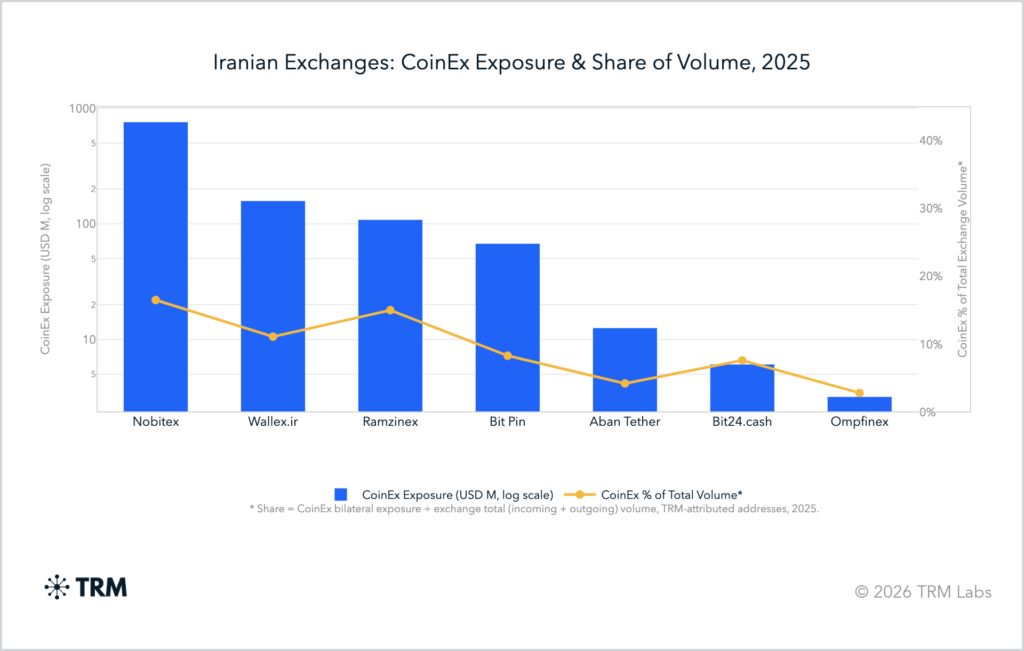
The report states that roughly $2.7 billion of the traced funds flowed between CoinEx and Nobitex, Iran’s largest domestic cryptocurrency exchange. TRM Labs estimates that transfers between the two platforms averaged approximately $1 million per day over several years, suggesting a sustained pattern of financial activity rather than isolated transactions.
Researchers further noted that by 2024, CoinEx had become Nobitex’s largest external exchange partner. According to the report, the transaction volume between the two exchanges was nearly nine times greater than Nobitex’s activity with its second-largest external counterpart. TRM Labs argued that this level of interaction appeared inconsistent with what it described as normal independent market behavior.
The findings were published only weeks after the U.S. Department of the Treasury announced additional sanctions targeting several Iranian cryptocurrency exchanges as part of its broader enforcement campaign aimed at restricting Iran’s access to international financial systems.
Earlier this year, U.S. officials also reported the seizure of approximately $1 billion in cryptocurrency connected to Iranian exchanges and digital wallets, highlighting the increasing role of blockchain assets in international sanctions enforcement.
CoinEx has firmly denied the allegations presented in the report.
In a public statement released on the social media platform X, the exchange said it has never maintained any commercial relationship with the Iranian government or domestic Iranian cryptocurrency exchanges. The company also rejected suggestions that it knowingly facilitated transactions involving sanctioned entities.
CoinEx argued that blockchain analytics can identify wallet interactions but cannot determine whether an exchange had knowledge of the origin, destination, or purpose of customer transactions. According to the company, the existence of on-chain fund flows should not be interpreted as evidence that a trading platform intentionally participated in prohibited financial activity.
Beyond CoinEx itself, the TRM Labs report also examined activity involving ViaBTC, a cryptocurrency mining pool affiliated with the exchange.
Researchers claimed that approximately $154 million in traced exposure connected ViaBTC to Nobitex through mining reward distributions. The report additionally alleged that ViaBTC supplied liquidity to Nobitex following a major cybersecurity incident in June 2025, when the Iranian exchange suffered a hacking attack that resulted in losses estimated at approximately $90 million.
At the time of publication, ViaBTC had not publicly responded to the findings.
The report also highlights the significant role Nobitex plays within Iran’s cryptocurrency ecosystem.
According to previous blockchain forensic research, Nobitex is believed to process nearly half of Iran’s domestic cryptocurrency trading volume, making it one of the country’s most important digital asset platforms. Analysts have previously described the exchange as a key component of Iran’s crypto infrastructure for facilitating access to international digital asset markets despite financial restrictions.
In recent months, Nobitex has also attracted additional scrutiny after reports suggested possible connections between individuals associated with the exchange and influential political figures within Iran. Those reports have further intensified international attention on cryptocurrency activity involving sanctioned jurisdictions.
Meanwhile, U.S. authorities continue expanding enforcement efforts across the cryptocurrency industry.
The Office of Foreign Assets Control (OFAC) has imposed sanctions on multiple companies accused of assisting Iranian financial networks through digital assets, including several overseas entities that regulators allege acted as intermediary platforms for organizations connected to the Islamic Revolutionary Guard Corps (IRGC).
The latest findings illustrate the growing importance of blockchain analytics in monitoring cross-border cryptocurrency transactions and enforcing international sanctions. At the same time, the disagreement between TRM Labs and CoinEx highlights an ongoing debate within the digital asset industry regarding how blockchain data should be interpreted and whether transaction tracing alone is sufficient to establish responsibility for potentially illicit financial activity.
As regulators around the world continue strengthening oversight of cryptocurrency markets, exchanges are likely to face increasing pressure to enhance compliance systems, improve transaction monitoring, and demonstrate robust anti-money laundering procedures designed to prevent sanctioned individuals and organizations from accessing global digital asset infrastructure.