European lawmakers are moving toward a broader regulatory approach for digital assets, urging the European Commission to evaluate whether decentralized finance (DeFi), cryptocurrency staking, lending services, and non-fungible tokens (NFTs) should fall under future updates to the European Union’s crypto regulatory framework. The recommendations signal that the EU is already looking beyond the current scope of the Markets in Crypto-Assets Regulation (MiCA) as blockchain technology continues to evolve.
The Committee on Economic and Monetary Affairs (ECON) of the European Parliament has approved a nonbinding report outlining its vision for the next stage of cryptocurrency regulation within the European Union. The document encourages the European Commission to assess whether several rapidly growing sectors of the digital asset industry require additional oversight beyond the existing MiCA framework.
Among the areas highlighted by lawmakers are decentralized finance (DeFi) protocols, crypto lending and borrowing platforms, staking services, tokenized financial products, and NFT markets. While these sectors have expanded significantly over the past several years, many currently operate outside the full scope of MiCA’s existing regulatory provisions.
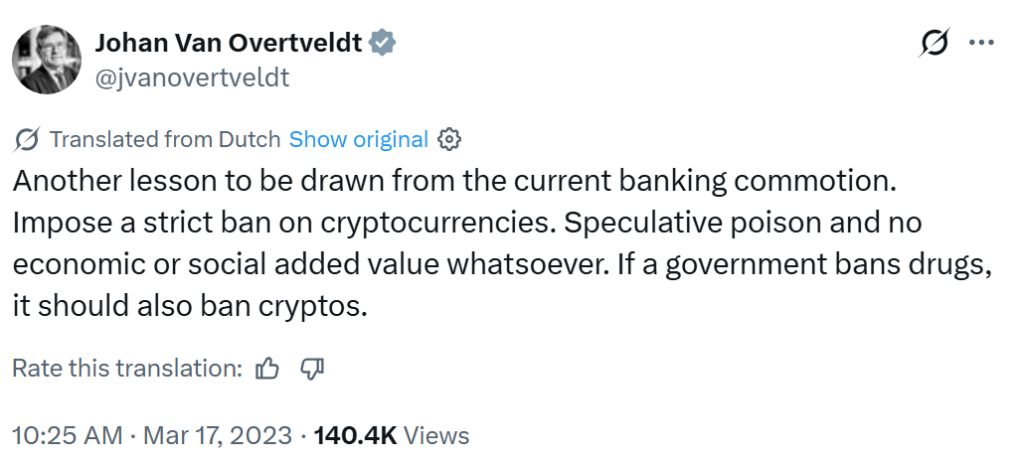
The report was drafted by Belgian Member of the European Parliament Johan Van Overtveldt, who presented the recommendations as an own-initiative resolution. Unlike binding legislation, the document does not immediately create new legal obligations or amend existing laws. Instead, it represents Parliament’s policy recommendations to the European Commission regarding the future direction of digital asset regulation.
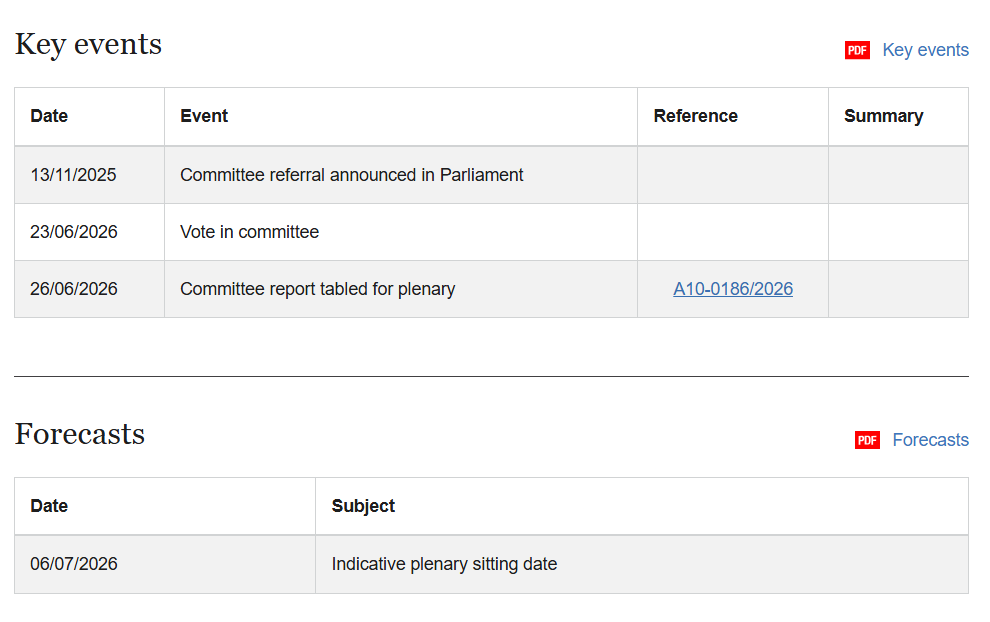
The proposal is expected to proceed to a plenary vote before the full European Parliament in early July. If adopted, it will become Parliament’s official political position on cryptocurrency regulation, although any actual legal changes would still require separate legislative proposals and approval through the EU’s standard lawmaking process.
A central theme throughout the report is the promotion of regulatory consistency across all EU member states.
Lawmakers warned that individual countries should avoid introducing national crypto regulations that exceed MiCA’s requirements, arguing that fragmented rules could undermine the single European market and create unnecessary compliance burdens for cryptocurrency companies operating across multiple jurisdictions.
Instead, the committee emphasized that MiCA should remain the foundation for crypto regulation throughout the European Union while allowing future updates to address emerging technologies as the industry continues to mature.
Another major focus of the report is the growing importance of tokenization within traditional finance.
Members of Parliament encouraged the European Commission to continue supporting the development of tokenized financial assets and blockchain-based settlement systems. They argued that tokenization has the potential to modernize financial infrastructure by increasing efficiency, reducing transaction costs, improving transparency, and enabling faster settlement across capital markets.
The report also expressed growing support for euro-denominated stablecoins, reflecting an increasingly favorable attitude toward regulated digital currencies issued by private companies.
According to lawmakers, euro-backed stablecoins could play an important role alongside tokenized commercial bank deposits and future wholesale central bank digital currencies (CBDCs). Together, these digital payment instruments could strengthen Europe’s financial infrastructure while making cross-border transactions faster, less expensive, and more efficient for businesses and consumers.
Lawmakers further suggested that broader adoption of euro-based stablecoins could enhance the international role of the euro while improving the competitiveness of European financial markets within the rapidly expanding global digital asset economy.
The committee’s position reflects a noticeable shift in regulatory sentiment.
Only a few years ago, many European policymakers maintained a significantly more cautious stance toward cryptocurrencies following market instability and several high-profile banking failures. During the 2023 banking crisis, concerns surrounding stablecoins intensified after the collapse of Silicon Valley Bank temporarily affected the reserves backing the USDC stablecoin, briefly causing it to lose its one-to-one peg with the U.S. dollar.
Since then, however, regulators have increasingly focused on establishing clear legal frameworks rather than imposing broad restrictions on digital assets.
The recommendations also align with the European Parliament’s broader vision for digital money. Earlier this week, the ECON committee supported legislation advancing the development of a digital euro, emphasizing that public digital currencies issued by central banks and privately issued stablecoins should coexist within the same financial ecosystem rather than compete against one another.
Meanwhile, the European Commission is already conducting its own review of MiCA.
Earlier this year, regulators launched a public consultation seeking industry feedback on whether future revisions should expand the regulation to include decentralized finance protocols, crypto staking, lending and borrowing platforms, NFTs, tokenized securities, and other emerging blockchain applications. The consultation also reopened discussions regarding MiCA’s current restrictions on interest-bearing stablecoins.
The timing of these discussions is particularly significant because MiCA’s transitional implementation period is approaching its conclusion. Beginning in July, cryptocurrency asset service providers operating across the European Union will generally be required to obtain full authorization under MiCA to continue offering services throughout the bloc.
As blockchain technology continues to evolve beyond traditional cryptocurrency trading, European policymakers appear increasingly focused on building a regulatory framework capable of supporting innovation while maintaining investor protection and financial stability. The latest recommendations suggest that future updates to MiCA could significantly expand the range of blockchain-based products and services subject to EU oversight, further shaping the development of one of the world’s largest regulated digital asset markets.